
A World on Your Baby’s Skin
Billions of microorganisms live on and inside your baby’s body: bacteria, fungi, and viruses that together form an ecosystem. It may sound unsettling, but the vast majority of these microorganisms are not harmful. They’re good. In fact, they’re essential.
The skin microbiome is the layer of microorganisms that lives on your baby’s skin. It forms a living shield that protects her from pathogens, keeps her skin balanced, and actively contributes to the development of her immune system. Without that shield, her skin is vulnerable, dry, and prone to irritation.
It starts before birth
Even while still in the womb, your baby is surrounded by amniotic fluid that contains microorganisms. Through the umbilical cord, she has her first contact with bacteria, even before she sees the world. During a natural birth, the baby passes through the birth canal. This is no biological coincidence. It is a transfer: the mother provides her baby with a complete bacterial starter kit—millions of lactobacilli that colonize and protect the skin and intestines.
With a cesarean section, this transfer happens differently. The baby doesn’t receive the bacteria from the birth canal. That doesn’t mean anything is wrong, but it does highlight just how valuable that “starter kit” is and why microbiome-safe care deserves extra attention afterward.
After birth, the microbiome continues to develop at lightning speed. Breastfeeding introduces new bacteria. Skin-to-skin contact with you, with siblings, and with pets—every interaction contributes to the richness of the microbiome. The more diverse it is, the stronger it becomes.
Why is it so fragile?
A newborn baby’s skin is thinner than that of an adult. It loses moisture more quickly, is more sensitive to external factors, and has had less time to build up a strong protective barrier. That makes the first few months crucial.
Scientific research shows that the composition of the microbiome during the first years of life has a significant impact on skin health later in life. Babies with a richer, more diverse microbiome are less likely to develop eczema, allergies, and recurring skin problems. And the reverse is also true.
What many parents don’t realize is that the disruption often comes from an unexpected source. Many baby products smell nice and lather well, but the ingredients that make them do that also kill the good bacteria on the skin—a little bit with every bath, day after day. Antibiotics, which are sometimes unavoidable and life-saving, do not distinguish between good and bad bacteria. And excessive hygiene deprives the microbiome of the stimulus it needs to develop.
What a Healthy Microbiome Does
A strong, diverse microbiome protects your baby in several ways at once. Good bacteria occupy the space that harmful bacteria would otherwise take up. They produce antimicrobial substances that act as an extra line of defense. They train the immune system to distinguish between what’s harmful and what’s harmless, making babies less likely to react to allergens and triggers. They help retain moisture, making the skin more supple and less prone to irritation. And if the skin does become irritated, a healthy microbiome helps it heal faster.
How to Protect It
You don’t have to be a microbiologist to protect your baby’s microbiome. Choose microbiome-safe care products free of SLS, fragrance, and harsh preservatives. Breastfeed if possible, because breast milk contains prebiotics and probiotics that actively nourish the microbiome. Let your baby explore the world: playing outside, touching sand, interacting with animals. Every new experience makes the microbiome more diverse and stronger.
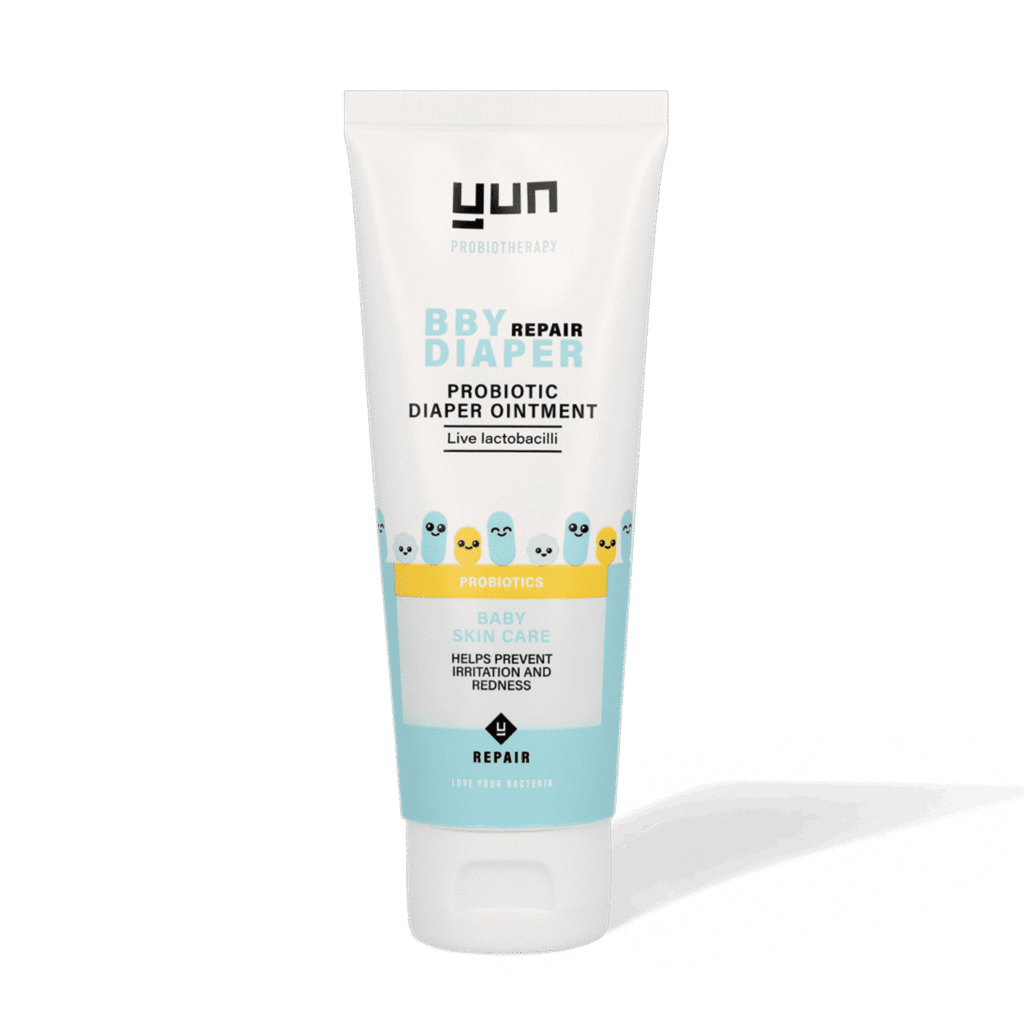
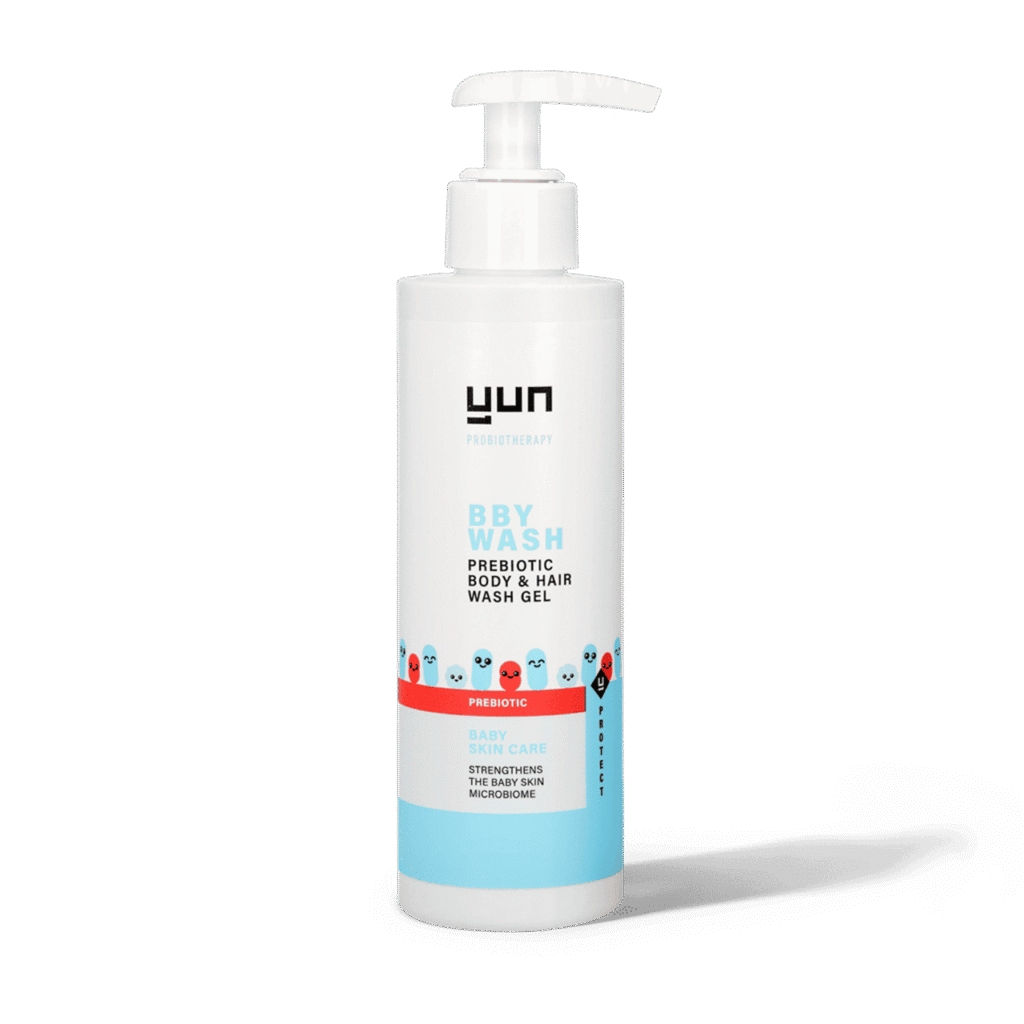
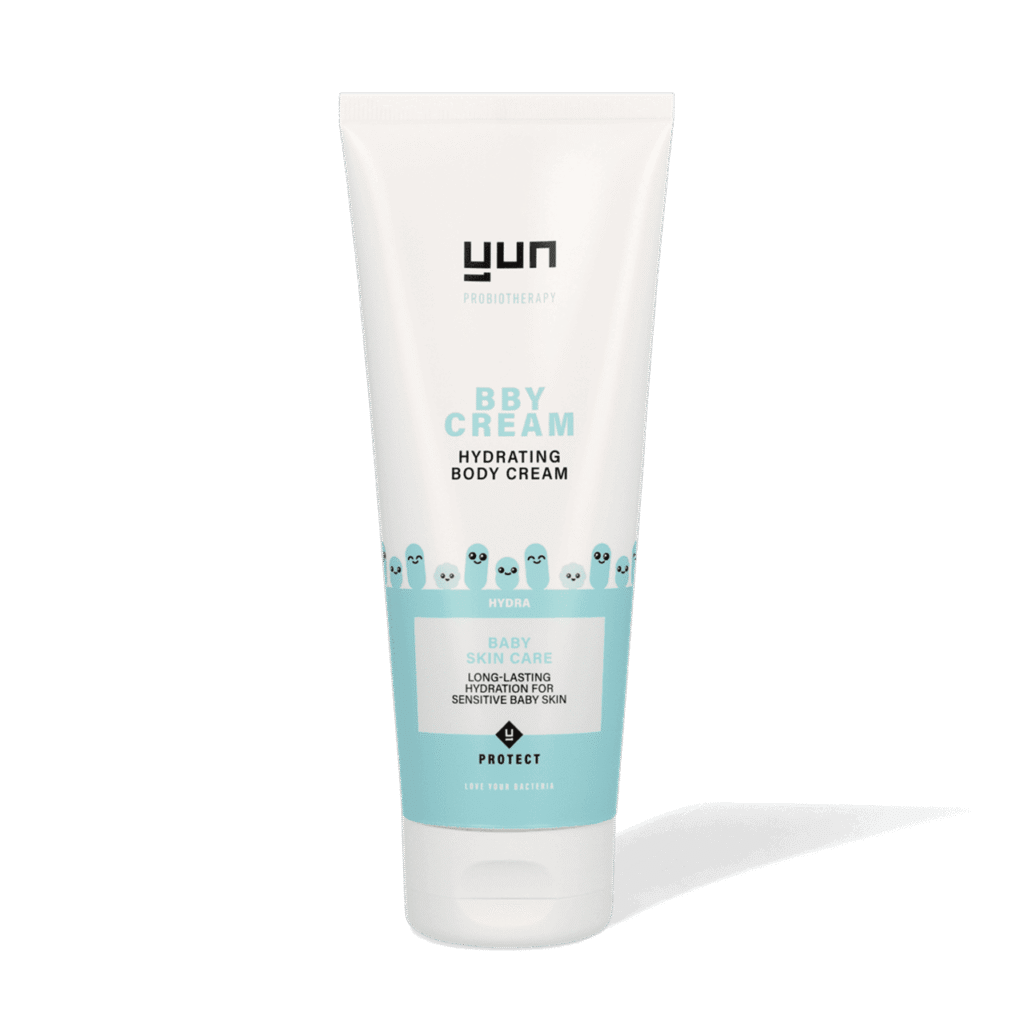
And actively support your baby’s skin with live probiotics. YUN BBY products contain live lactobacilli that strengthen your baby’s skin microbiome with every bath, every diaper change, every day. Not by taking anything away, but by adding what the skin needs.
A healthy start is a choice
Your baby’s microbiome is the foundation of her skin health for life. And the first few months are the most crucial. That might sound like a lot of pressure, but the opposite is true. You don’t have to be a perfect parent. You just need to make mindful choices about what you use and how you care for her skin every day.
Because a healthy start isn’t a matter of chance.