
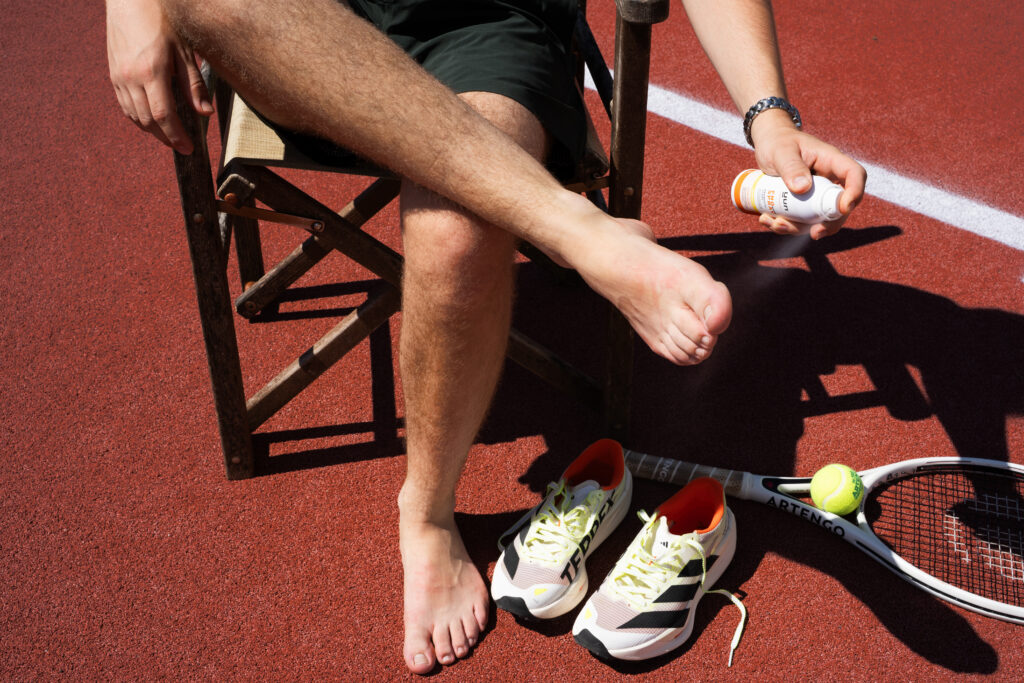
What Athlete’s Foot Actually Is
Athlete’s foot, medically known as tinea pedis, is a fungal infection of the skin on the feet. The fungus that causes it, usually a dermatophyte such as Trichophyton rubrum, thrives in warm, moist environments. Lockers, swimming pools, and athletic shoes that don’t dry out—these are the classic breeding grounds.
The infection usually starts between the toes, where the skin is tightly packed and has trouble staying dry. The skin turns white, becomes soft, and starts to flake. It itches, and sometimes there is a burning sensation or an unpleasant odor. In more severe cases, the infection spreads to the sole of the foot or the toenails.
But the fungus itself isn’t the whole story. Fungi are always present on our skin, just like bacteria. They are part of the foot’s microbiome. The problem isn’t that they’re there, but that they take over. And that happens when the balance of the microbiome is disrupted.
The Foot Microbiome
The foot has its own microbiome, a community of bacteria and fungi that work together to protect the skin. Beneficial bacteria produce substances that inhibit the growth of harmful fungi. They occupy the space that would otherwise be available for infections. They maintain the skin’s pH at a level that fungi find unfavorable.
If that balance is disrupted—by aggressive washing, by wearing synthetic socks that don’t breathe, or by prolonged use of antifungal products that also kill beneficial microbiota—the pathogenic fungus has an opportunity to grow. Traditional antifungal treatment is effective at killing the infecting fungus. But it does not restore the microbiome. And without a healthy microbiome, the foot is vulnerable to future exposure. Hence the cycle.
Why the locker room isn’t the only culprit
Many people think they get athlete’s foot from unsanitary locker rooms or swimming pools. And while that is certainly a source of infection, it’s not the whole story.
Two people walk on the same wet floor in the same locker room. One gets athlete’s foot, the other doesn’t. The difference lies in the resilience of their foot microbiome. A healthy, diverse microbiome keeps the fungus out. A disrupted microbiome lets it in. That means prevention goes beyond keeping your feet dry and wearing flip-flops in the locker room. It starts with the microbiome you already have.
What Really Helps
Treating active athlete’s foot requires a two-pronged approach. On the one hand, treat the infection; on the other hand, restore the microbiome so that the infection has no chance of returning.
Keeping your feet dry remains crucial. After showering or swimming, pat your feet thoroughly dry, including between the toes. Wear cotton or wool socks instead of synthetic ones. Wear breathable shoes and, preferably, switch them out daily so they can dry. Avoid washing your feet too vigorously with antibacterial soap or antifungal products in your daily routine. These products also kill the good bacteria and fungi that protect your feet.
And actively support the microbiome. YUN FNG was developed to do exactly that: it contains live probiotics that restore the foot’s microbiota, strengthen the protective bacterial layer, and make the environment less hospitable to pathogenic fungi—not by destroying them, but by restoring the microbiome.
Athlete’s foot isn’t inevitable. But as long as you only treat the fungus and ignore the microbiome, it will keep coming back.


