
THE CAUSE OF ACNE
We’d all love to have glowing skin, but some of us are simply more prone to breakouts than others. Did you know that 80% of people will experience acne at some point in their lives? Hormonal changes, changes in your diet and lifestyle, antibacterial treatments, or products like makeup can also affect the microbiome.
This natural protective barrier on your skin protects you from acne, but an imbalanced microbiome can trigger acne breakouts. These seven factors can throw your microbiome out of balance and cause flare-ups. Some are beyond your control, but most are not.
1. Hormones
Have you ever wondered why your acne always comes back right before your period? Or why women don’t get acne after menopause? It all has to do with hormones. Hormonal fluctuations naturally occur around the time of menstruation, during pregnancy, or during menopause. Women going through menopause are more prone to acne because female hormone levels drop and the effect of male hormones (androgens such as testosterone) increases. This hormonal imbalance can cause the sebaceous glands to go into overdrive and produce too much sebum.
2. Stress
Stressful situations can cause a hormonal imbalance, which causes your body to produce more androgens. The oil glands are stimulated to produce more sebum, leading to clogged pores and acne.
3. Genetic predisposition
If you have a blood relative who suffers from acne, your genetics will contribute to acne. Don’t worry—having acne genes doesn’t mean you’ll automatically get it. They just increase your risk. Because there are many factors that contribute to the development of acne, you can treat it even if you have the genes for it.
4. Medication
Acne can be an unwanted side effect of certain medications. If you take medications that affect your hormone levels—for example, by increasing androgen levels—your skin is more prone to breakouts and flare-ups.
5. Beauty Products
You don’t want to clog your pores or cause breakouts by using too many cosmetics and skincare products. Avoid thick textures, as they’re more likely to clog your pores. If you have oily skin, don’t use oily products. They won’t clog your pores, but they’ll make your skin even oilier. Gels, light serums, or thin lotions are the best choice. In your daily skincare routine, use gentle products that don’t disrupt your skin microbiome.
6. Daily Skincare
When it comes to your daily skincare routine, cleanse your skin but don’t overdo it. Cleansing and exfoliating too often can make your acne worse. Facial scrubs and exfoliation can damage and dry out your skin, making it more sensitive to external factors. Try not to squeeze your pimples, as this can make your acne even worse. And finally, moisturizers are essential for every skin type, even for acne-prone skin.
7. Nutrition
Why does your acne get worse when you eat a lot of chocolate or junk food? As for chocolate and dairy products, it may be the (extra) hormones in cow’s milk that cause your sebaceous glands to produce too much sebum. As for junk food, which contains a lot of high-glycemic foods, your insulin levels will spike. This causes acne for the same reasons as when your hormone levels change. Try to follow a healthy diet with organic foods to keep your skin clear.
PROBIOTIC THERAPY
The more good bacteria there are in your microbiome, the stronger your natural defense against the harmful bacteria that cause pimples and blemishes. That’s why it’s important to find ways to promote the good bacteria and fight the bad ones.
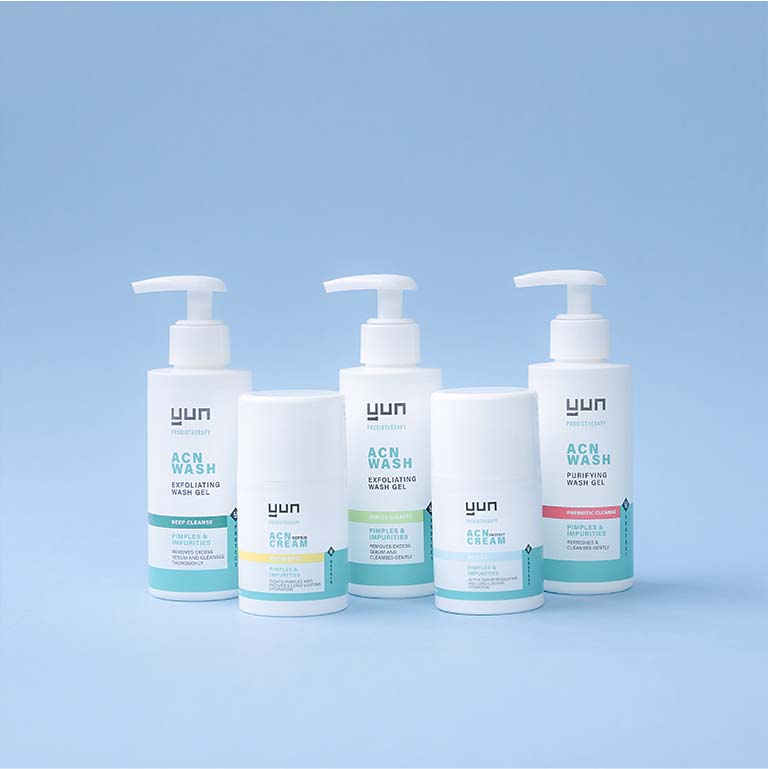
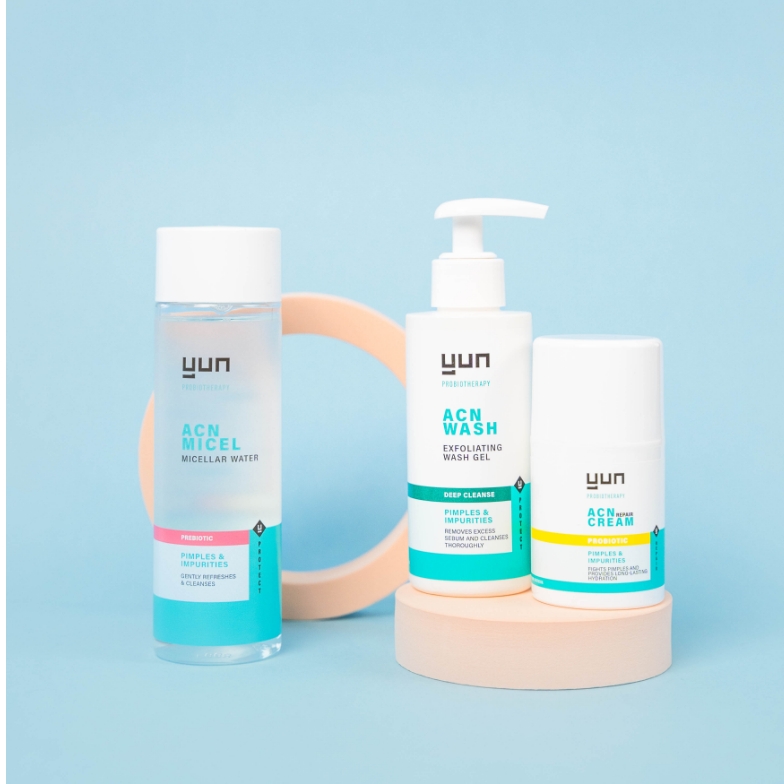
YUN Probiotherapy adds live beneficial lactobacillus bacteria to your skin to help restore and protect your microbiome in a more natural way. The ACN cream ensures that the bacteria are delivered exactly where they’re needed.
ACNE IN TEENAGERS VS. ACNE IN ADULTS
Although teenage acne and adult acne look the same, there is a difference. While teenagers have relatively thick skin, adults’ skin becomes thinner as they age. Mature skin is more sensitive, and the older your skin gets, the less sebum it will produce. Because mature skin is drier than younger skin, it requires daily moisturizing and gentle skincare. To keep your skin’s natural protective barrier intact and active, you’ll need to adapt your skincare routine to the needs of your mature skin.
ACN – ACNE SYMPTOMS
Lightning-fast. Effective. Safe. An all-in-one treatment that effectively combats acne symptoms and breakouts—all with the power of good bacteria! The combination of live bacteria and microbiome-friendly ingredients helps your skin naturally regain its healthy balance and become breakout-free.