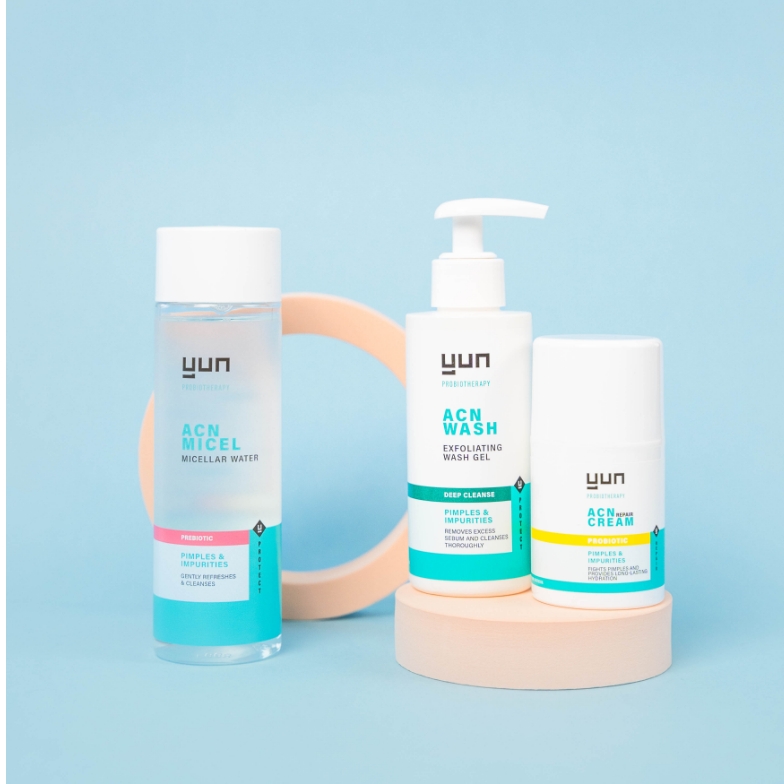

Man, what a breakout!
Acne is caused by an imbalance in the bacterial population on the skin. Hormonal changes during puberty or later in life can stimulate the growth of Cutibacterium acnes. This overgrowth can trigger acne.
It is a naturally occurring and completely harmless bacterium that we all have. Acne only develops when the bacterium overgrows.
Acne and pimples have many underlying causes, such as hormonal fluctuations, diet, stress, medication, and more. This causes your skin to produce too much sebum, which creates a breeding ground for harmful bacteria.
Give your pores some breathing room!
Cutibacterium acnes also thrives in a low-oxygen environment. So you want to make sure your pores can “breathe.” When sebum combines with dead skin cells to clog the hair follicle, there is less oxygen present. This encourages Cutibacterium acnes to multiply.
An overgrowth of Cutibacterium acnes triggers an inflammatory response from the immune system. A pimple forms. The presence of Staphylococcus aureus (yes, another name that’s hard to pronounce) could also make this local inflammation worse.
Does “sebum” sound familiar to you?
Each hair has sebaceous glands that produce sebum. Sebum keeps the hair and skin moisturized and protects the skin from drying out. The bacterium Cutibacterium acnes lives in these sebaceous glands. The bacterium feeds on the fatty acids in the sebum.
The more sebum there is, the better the microorganism can grow. Hormonal changes during puberty or menopause can, among other things, stimulate sebum production.
7 Reasons Why Adults Can Also Get Acne
Do you struggle with acne as an adult? We’ll explain seven factors that can cause acne. Believe it or not, you can control most of them yourself to fight acne. Cool, right?