
The Bacterial Basis of Acne
Healthy facial skin generally harbors three microorganisms: Propionibacterium, Staphylococcus, and Malassezia. These three microorganisms are present both on the skin’s surface and within the hair follicles (where the inflammatory reaction that leads to the development of acne occurs). These bacteria play a role in the development of acne, although they are certainly not the only ones that contribute to it.
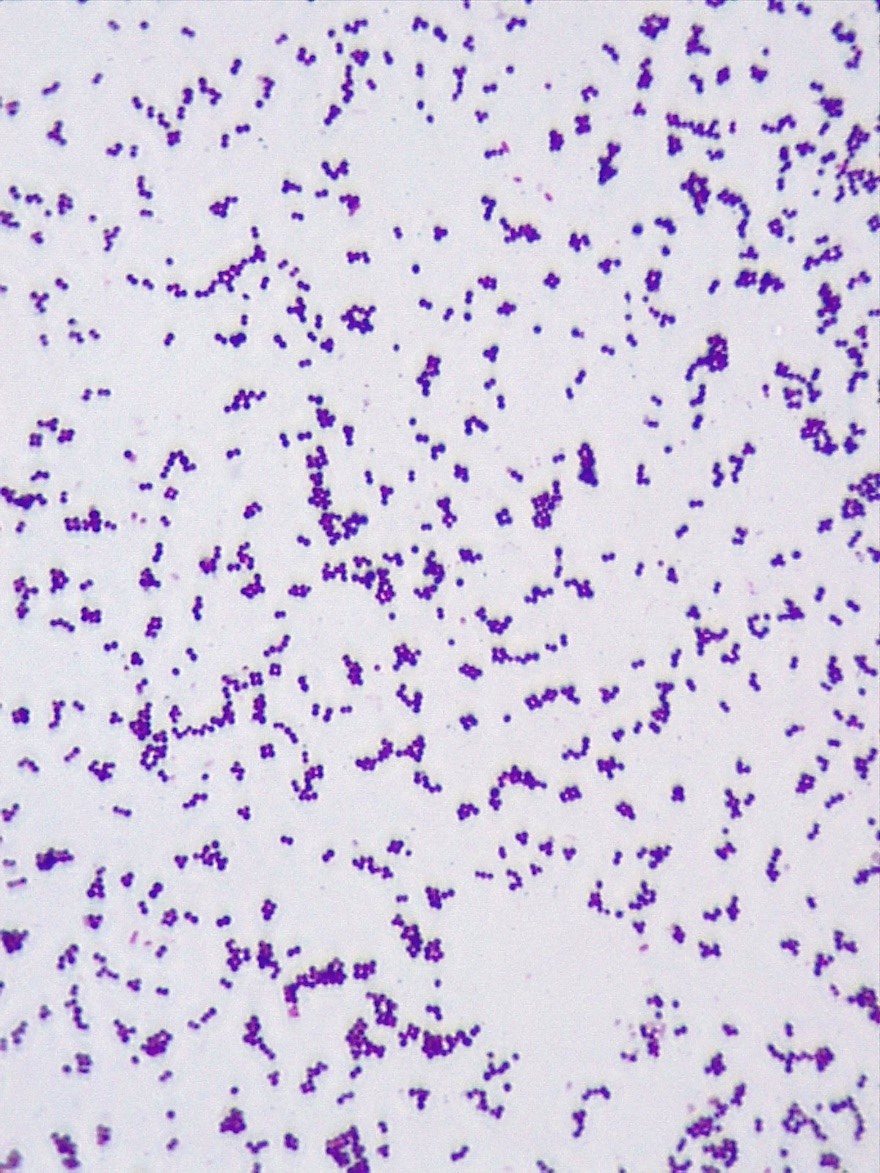
We know that Propionibacterium is the dominant microorganism in acne lesions. Researchers suspect that this bacterium is a major cause of acne. The presence of Propionibacterium acnes increases significantly during puberty, when hormonal changes stimulate natural sebum production.
Acne is characterized by swollen sebaceous glands in the hair follicles. Propionibacterium acnes thrives in the oily microenvironment of the hair follicle. In response to the swelling or infection, the bacteria produce inflammatory substances that result in papules, pustules, and cysts.
Resistance to Propionibacterium acnes
Antibiotics remain the most commonly prescribed treatment for acne vulgaris. Although their exact mechanism of action is not yet clear, they are thought to primarily target the dominant microorganism, Propionibacterium acnes. Nevertheless, researchers hypothesize that it is the anti-inflammatory nature of these drugs that produces clinical results. The most commonly used antibiotics are erythromycin, clindamycin, doxycycline, and minocycline.
Although these organisms are susceptible to antibiotics, since the 1970s, an increasing number of antibiotic-resistant strains of Propionibacterium acnes have been reported in many countries around the world. These strains now frequently exhibit resistance to erythromycin, clindamycin, roxithromycin, and erythromycin. The lack of response to treatment with this antibiotic is a global problem. Learn more about antibiotic resistance here!
If we want to prevent the rise of antibiotic resistance, we must reevaluate the use of antibiotics as a first-line treatment.
HOW TO FIGHT BACTERIA-CAUSED PIMPLES?
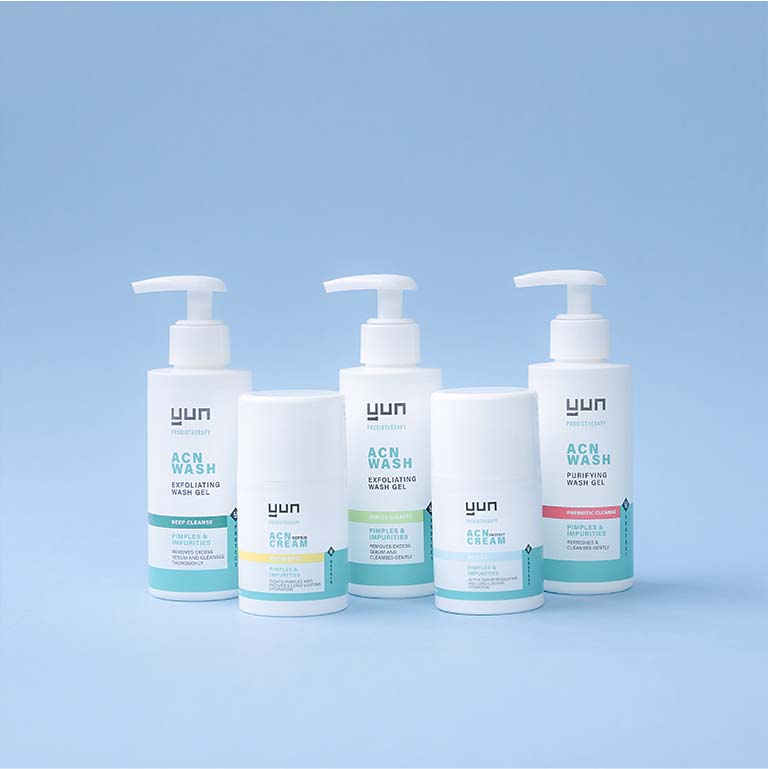
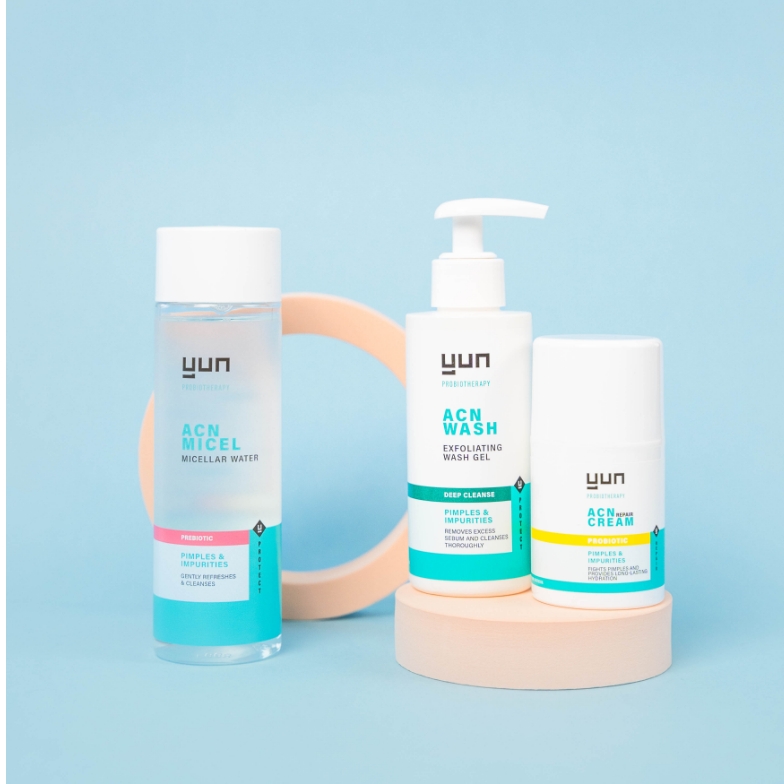
YUN has developed ACN PROBIOTIC REPAIR Cream, which combats acne symptoms using live bacteria: the three live Lactobacillus strains have been specially selected to naturally compete with Propionibacterium acnes, Staphylococcus, and Malassezia. ACN PROBIOTIC REPAIR Cream combats the bacterial infection without damaging your skin or the balance of your microbiome and prevents antibiotic resistance. As always, ACN—like all YUN products—is gentle on the skin and its microbiome.
ACN – ACNE SYMPTOMS
Lightning-fast. Effective. Safe. An all-in-one treatment that effectively combats acne symptoms and pimples. And it does so with the power of good bacteria! The combination of live bacteria and microbiome-friendly ingredients helps your skin naturally regain a healthy balance and become pimple-free.